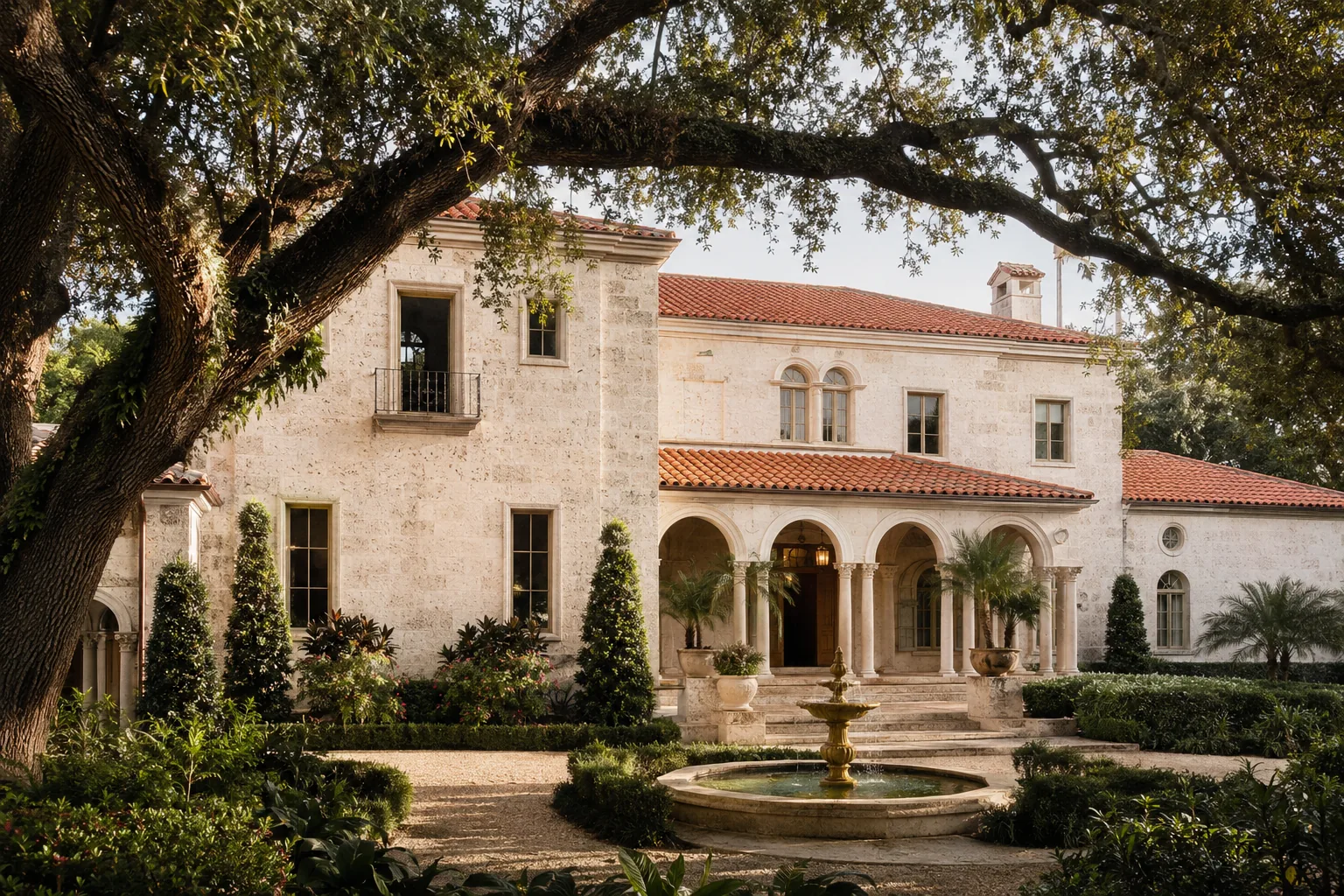
Coral Gables stands apart from most of Miami because it was designed, a planned city conceived in the 1920s around a coherent Mediterranean-revival vision, with coral-stone facades, barrel-tile roofs, arched loggias, and tree-lined avenues laid out to a plan rather than left to chance. A century later, that original discipline is exactly why the Gables holds its value while flashier districts cycle through reinvention.
The defining asset of the market is the historic Mediterranean home, the coral-stone villa under mature canopy, and it is genuinely irreplaceable. The architectural character, the scale of the lots, the maturity of the landscaping, and the coherence of the streetscape cannot be manufactured in a new development. A buyer in the Gables is purchasing a piece of a designed city that no amount of capital could recreate from scratch, and scarcity of that kind is the most durable foundation for value.
The buyer the Gables attracts tends to be different from the buyer chasing the newest tower. They value permanence, architectural integrity, and a sense of place with real history, often a family establishing a long-term home rather than an investor seeking a quick cycle. That buyer profile gives the market a stability that the more speculative districts lack, because the owners are there to live, not to flip.
The market is not without its considerations. Historic Mediterranean stock carries the responsibilities of older construction and, in protected cases, of preservation standards, and a buyer should understand the condition, the systems, and any restrictions on alteration before committing. These are manageable realities rather than deterrents, but they reward the buyer who does the diligence and surprise the one who does not.
There is also a newer, contemporary layer to the Gables, a stock of modern residences and a maturing urban core that broadens the market beyond the historic homes. This gives a buyer a genuine choice between the irreplaceable heritage villa and a contemporary residence with the conveniences of new construction, within the same well-planned and well-governed city. Both benefit from the underlying discipline of the place.
The case for Coral Gables, in the end, is a case for coherence and permanence in a city often defined by neither. It does not chase the cycle, and it has not needed to. For the buyer who wants an asset and a setting that will look much as they do now in twenty years, the Gables remains one of the most defensible choices in all of Miami, precisely because it was built to last from the beginning.