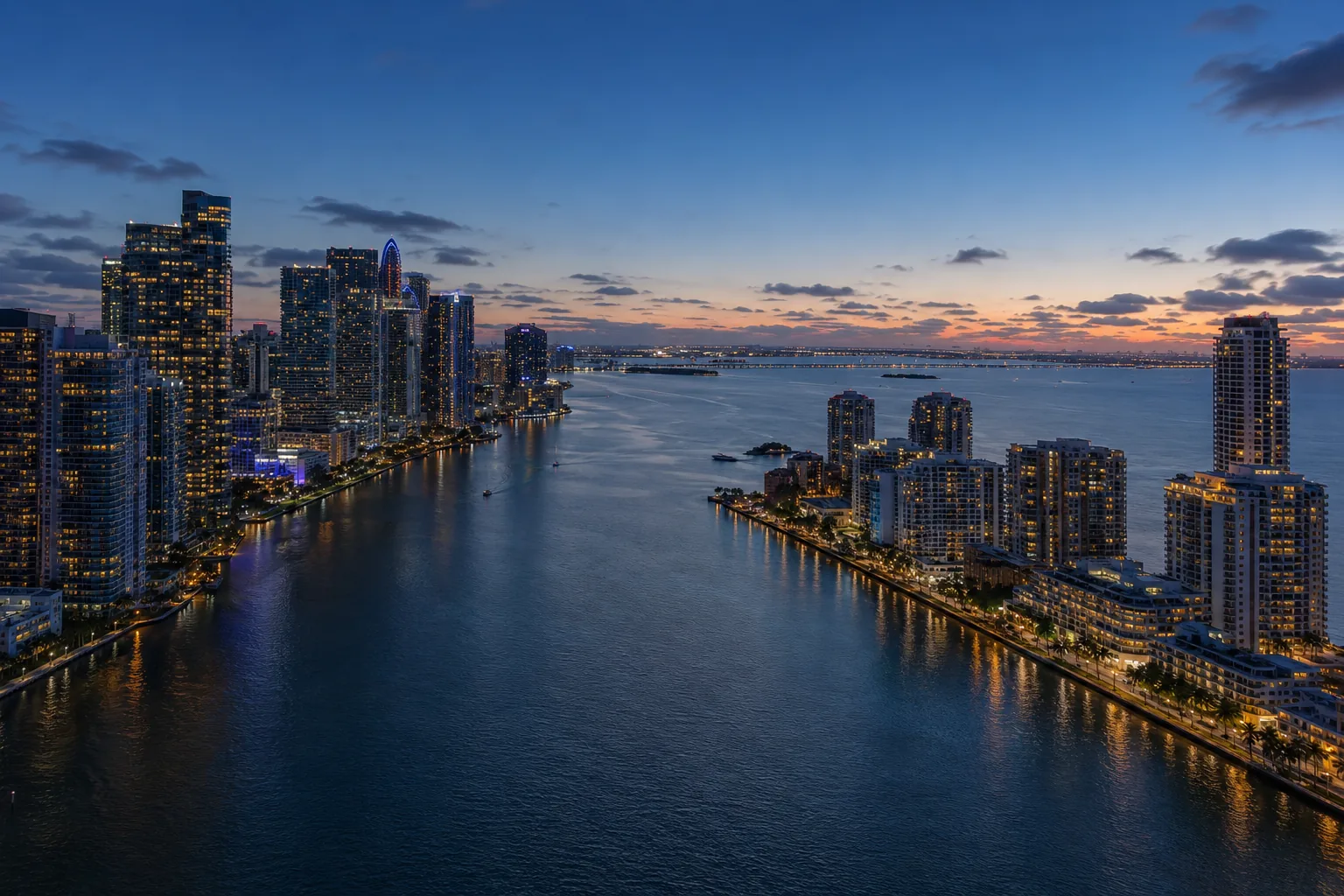
Brickell and Edgewater are often discussed as rivals, which is the wrong frame. They are two answers to two different questions, and the buyer's task is to know which question they are actually asking before they choose a side. Brickell is the mature answer. Edgewater is the still-developing one. Neither is simply better.
Brickell has become, over the past 15 years, a genuine urban core, a place with the density, the office base, the restaurants, and the around-the-clock activity that make a neighborhood feel finished. For the buyer who wants to step out of the lobby into a functioning city, Brickell delivers that now, not eventually. The cost of that maturity is that most of the upside from becoming a city has already been captured. You are buying a known quantity at a price that reflects how well it works.
Edgewater, just to the north, is the earlier-stage thesis. It offers the bay frontage and the proximity to Miami's cultural and downtown districts, with a built environment that is still arriving. The buyer here is making a longer bet: that the neighborhood will continue to fill in, that the waterfront product will mature, and that today's pricing reflects a district that is not yet finished. That bet has paid well for those who made it early, and the honest question is how much early is left.
My reading is that the two markets reward opposite temperaments. Brickell rewards the buyer who values certainty and liquidity, who wants an asset that will always have a deep resale market because the neighborhood works without further development. Edgewater rewards the buyer with patience and conviction, who is comfortable owning into a thesis that is still playing out and who will be rewarded if it continues to.
There is also a simple structural difference worth naming. Brickell's best inventory trades in a deep, well-understood market, which means tighter spreads and faster transactions but fewer obvious bargains. Edgewater's market is shallower and more variable, which means more dispersion in pricing, both the genuine value and the genuine mistake, and a correspondingly higher reward for representation that knows the specific building and the specific line.
For the next decade, I would put it this way. If the goal is to own a finished city today, Brickell is the disciplined choice and you should pay for the certainty without apology. If the goal is to own the appreciation of a district still becoming itself, Edgewater is where the compounding has further to run, provided the buyer has the temperament to hold through the becoming. The mistake is buying one while secretly wanting the other.